
Contents
- Why Placement Outcomes Are Decided Before Placement Season
- 10 Ways Colleges Can Improve Placement Preparation in 2026
- 1. Start Placement Preparation from the Second Year
- 2. Conduct Baseline Skill Assessments
- 3. Track Skill Gaps Through Readiness Dashboards
- 4. Introduce Role-Specific Training
- 5. Conduct Regular Mock Placement Drives
- 6. Build Recruiter-Ready Student Profiles
- 7. Strengthen Communication and Interview Skills
- 8. Encourage Internships and Practical Projects
- 9. Monitor Student Readiness Every Month
- 10. Connect Student Readiness with Job Opportunities
- A 12-Month Placement Preparation Calendar for Colleges
- Key Placement Readiness Metrics TPOs Should Track
- How Kaabil Campus Helps Colleges Improve Placement Readiness
- Final Thoughts
- Frequently Asked Questions
Placement success does not begin when recruiters arrive on campus. It begins with how well students are prepared before they arrive.
Every year, colleges organize placement drives, invite recruiters and conduct training sessions to help students secure jobs. Yet many students enter their final year without a clear understanding of their skills, weaknesses or readiness for recruitment.
For Training and Placement Officers (TPOs), the challenge goes beyond attracting companies. It involves ensuring that students have the technical knowledge, communication skills and practical experience required to perform well in assessments and interviews.
When placement preparation begins only a few months before recruitment drives, colleges have limited time to identify and address these gaps.
A more effective approach is to make campus placement preparation an ongoing process supported by early assessments, targeted training and regular progress tracking.
In this blog, we will explore 10 practical ways colleges can improve placement preparation in 2026, strengthen student employability, measure college placement readiness and use platforms like Kaabil Campus to support better placement outcomes.
Why Placement Outcomes Are Decided Before Placement Season#
Many colleges focus heavily on placement preparation during the final year, when companies begin announcing recruitment drives.
However, by this stage, some students may still struggle with aptitude, technical assessments, communication skills or interview preparation.
These challenges cannot always be resolved through a few last-minute training sessions.
For example, a computer science student may perform well in academic examinations but struggle with coding assessments or explaining technical projects during an interview.
This is why college placement readiness should be measured throughout the academic journey rather than only during placement season.
A structured approach allows colleges to:
- Identify Skill Gaps Early: Understand where students need additional support.
- Provide Targeted Training: Focus on skills relevant to different job roles.
- Track Student Progress: Monitor improvement across semesters.
- Build Stronger Profiles: Prepare resumes, projects and skill credentials before recruitment.
- Improve Recruitment Readiness: Help students prepare for different hiring processes.
Effective placement readiness programs connect assessments, training and practical experience so that students can improve continuously.
10 Ways Colleges Can Improve Placement Preparation in 2026#
Improving student employability requires more than conducting occasional workshops or mock interviews.
Colleges need a structured process that helps students develop, assess and demonstrate the skills employers expect.
Here are 10 practical strategies to strengthen campus placement preparation
1. Start Placement Preparation from the Second Year#
Waiting until the final year leaves limited time to address technical, communication and aptitude-related skill gaps.
Colleges should introduce placement preparation activities from the second year through foundational assessments, career awareness sessions and skill-development programs.
For example, second-year students can focus on aptitude and communication, while third-year students move toward role-specific training and interview preparation.
Starting early gives students enough time to develop their capabilities before recruitment begins.
2. Conduct Baseline Skill Assessments#
Before planning training programs, colleges need to understand students' existing strengths and weaknesses.
Baseline assessments can evaluate technical knowledge, logical reasoning, quantitative aptitude, communication and problem-solving abilities.
For example, an engineering student may perform well in programming but require additional practice in aptitude tests.
These results help TPOs design relevant training instead of providing the same preparation to every student.
3. Track Skill Gaps Through Readiness Dashboards#
Managing student performance through multiple spreadsheets and reports can make it difficult to identify who needs support.
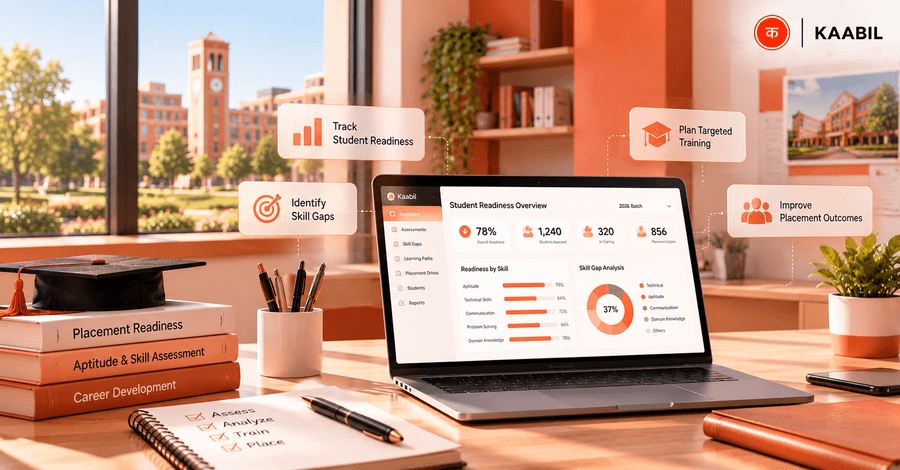
A centralized dashboard can provide visibility into assessment performance, skill gaps and readiness levels across departments and batches.
For example, if a department consistently performs below expectations in communication assessments, additional training sessions can be planned.
Regular tracking helps make college placement readiness measurable and gives TPOs a clearer picture of student progress.
4. Introduce Role-Specific Training#
Different job roles require different technical and professional capabilities.
A software developer may need coding and data structures, while a sales professional may require communication, negotiation and customer-handling skills.
Colleges should align training with relevant job roles and industry expectations.
Role-specific placement readiness programs help students focus on the skills required for their preferred career paths rather than preparing for every possible position.
5. Conduct Regular Mock Placement Drives#
Mock placement drives allow students to experience different stages of the recruitment process before actual company interviews.
These activities can include aptitude tests, technical assessments, group discussions, coding challenges and HR interviews.
For example, colleges can organize mock recruitment drives each semester and provide feedback based on student performance.
Regular practice helps students become familiar with recruitment processes and identify areas requiring improvement.
6. Build Recruiter-Ready Student Profiles#
A strong academic record does not always communicate a student's practical capabilities.
Colleges should help students develop professional resumes and profiles highlighting relevant skills, internships, academic projects, certifications and achievements.
For example, a student interested in data analytics can showcase SQL projects, Excel dashboards and relevant assessments.
Recruiter-ready profiles make it easier for employers to evaluate qualifications and understand what students can contribute.
7. Strengthen Communication and Interview Skills#
Technical knowledge is important, but students must also explain their ideas and experiences clearly.
Colleges can organize communication workshops, group discussions, presentations and mock interviews to develop professional confidence.
Students can practise introducing themselves, explaining projects and answering common interview questions.
These activities strengthen career readiness and help students communicate their capabilities during recruitment.
8. Encourage Internships and Practical Projects#
Practical experience helps students connect classroom learning with workplace expectations.
Internships, live projects, research assignments and industry collaborations can provide evidence of job-related abilities.
For example, a marketing student can demonstrate experience through a content marketing project or campaign analysis.
Encouraging practical learning strengthens student employability and helps students build credible professional profiles.
9. Monitor Student Readiness Every Month#
Assessments are valuable only when institutions use the results to guide improvement.
Placement teams should regularly review student participation, assessment performance, training completion and progress against readiness goals.
Students requiring additional support can receive targeted learning paths, reassessments or extra practice sessions.
Monthly monitoring helps colleges understand whether their placement preparation initiatives are working and where changes are needed.
10. Connect Student Readiness with Job Opportunities#
Training alone does not guarantee employment. Students also need access to relevant openings that match their skills and interests.
Colleges should align recruiter outreach and job matching with demonstrated student capabilities.
For example, students with strong programming skills can be connected with suitable software development opportunities.
Combining assessments, career profiles and relevant job discovery can help institutions improve student placement outcomes through a more focused recruitment approach.
A 12-Month Placement Preparation Calendar for Colleges#
A structured annual plan helps colleges make placement preparation a continuous activity rather than a last-minute effort.
By dividing assessments, training, practical experience and recruiter engagement across the year, placement teams can monitor progress more effectively.
Here is a sample 12-month plan.
Month | Placement Preparation Activity | Expected Outcome |
Month 1 | Baseline assessments | Identify initial skill gaps |
Month 2 | Aptitude and communication training | Strengthen foundational skills |
Month 3 | Technical and role-specific assessments | Evaluate job-related knowledge |
Month 4 | Resume building and profile development | Create recruiter-ready profiles |
Month 5 | Practical projects and internships | Build evidence of skills |
Month 6 | Mid-year readiness assessment | Measure student progress |
Month 7 | Mock aptitude and technical tests | Improve assessment performance |
Month 8 | Group discussions and mock interviews | Strengthen interview readiness |
Month 9 | Targeted skill-gap training | Support students needing improvement |
Month 10 | Recruiter outreach and job matching | Identify suitable opportunities |
Month 11 | Mock placement drives | Prepare for recruitment rounds |
Month 12 | Final readiness review and placement drives | Track recruitment outcomes |
This calendar can be adjusted based on academic schedules, course requirements and recruitment timelines.
The goal is to make campus placement preparation consistent, measurable and connected to student development.
Key Placement Readiness Metrics TPOs Should Track#
Effective placement readiness programs require more than tracking attendance or the number of training sessions completed.
TPOs need measurable indicators to understand whether students are becoming better prepared for recruitment.
Important metrics include:
- Assessment Participation Rate: Percentage of students completing assigned assessments.
- Skill-Gap Improvement: Changes in technical, aptitude and communication performance over time.
- Placement Readiness Rate: Percentage of students meeting the institution's defined readiness criteria.
- Resume Completion Rate: Percentage of students with updated, recruiter-ready profiles.
- Training Completion Rate: Students completing assigned learning activities.
- Interview-to-Offer Conversion: Percentage of interviewed students receiving job offers.
- Placement Rate: Percentage of eligible students securing employment.
For example, if students perform well in technical assessments but struggle during interviews, additional communication and interview training may be required.
Tracking these indicators regularly helps colleges identify weaknesses, measure improvement and take informed steps to improve student placement outcomes.
How Kaabil Campus Helps Colleges Improve Placement Readiness#
Managing student assessments, training, career profiles and recruitment activities through separate systems can create unnecessary work for placement teams.
Kaabil Campus brings these activities into a connected platform designed to make student readiness easier to measure and improve.
Instead of waiting until placement season to identify weaknesses, institutions can track student progress throughout their academic journey.
Its key capabilities include:
- Institution Readiness Dashboard: Provides student-level, batch-level and department-level visibility into readiness, participation and progress.
- Faculty-Authored Assessments: Allows faculty to create curriculum-aligned assessments using their own learning materials.
- Skill-Gap Learning Paths: Helps institutions assign targeted improvement activities based on student performance.
- Career Credentials: Provides shareable evidence of completed assessments and demonstrated skills.
- Redrob Score: Helps students build a record of assessed capabilities beyond academic qualifications.
- Campus Pass AI Agent: Supports job discovery, applications and recruiter outreach to connect students with relevant opportunities.
- Reporting and Nudges: Helps placement teams identify inactive students, missed assessments and areas requiring additional support.
For TPOs, Kaabil Campus provides greater visibility into college placement readiness without relying entirely on disconnected spreadsheets and vendors.
For students, it creates a more structured journey from assessments and skill development to career credentials and relevant job opportunities.
By connecting readiness tracking with ongoing improvement, Kaabil Campus supports placement preparation as a continuous process rather than a final-year activity.
Final Thoughts#
Strong placement outcomes begin long before companies arrive on campus.
Colleges that focus on early assessments, practical training, skill-gap tracking and recruiter-ready profiles can help students prepare more effectively for employment.
Successful placement preparation requires continuous evaluation, targeted support and opportunities to demonstrate real capabilities.
For TPOs, tracking college placement readiness provides better visibility into student progress and helps identify where additional training is needed.
At the same time, developing technical knowledge, communication skills and practical experience strengthens student employability beyond the placement season.
Kaabil Campus supports this approach by bringing together assessments, readiness dashboards, credentials and AI-assisted placement support.
Ultimately, improving placement outcomes is not just about inviting more recruiters. It is about ensuring that students have the skills, confidence and evidence needed to pursue relevant opportunities.
Frequently Asked Questions
Placement preparation should ideally begin in the first or second year of college. Early assessments, skill development and regular progress tracking give students more time to prepare before recruitment drives.
Colleges can improve student placement outcomes through early assessments, role-specific training, practical projects, mock interviews and relevant recruiter connections. Regular monitoring helps identify students needing additional support.
College placement readiness refers to how prepared students are for recruitment. It includes technical knowledge, aptitude, communication skills, practical experience, resume quality and interview preparation.
A campus placement preparation plan should include baseline assessments, skill-gap tracking, targeted training, mock placement drives, recruiter-ready profiles and regular progress reviews.
Kaabil Campus helps institutions track student readiness through assessments, dashboards, learning paths and career credentials. Its Campus Pass also supports job discovery and recruiter outreach, helping colleges manage preparation and placement activities more effectively.

Written by