Contents
- How do recruiters decide which resumes to shortlist?
- Why is my resume not getting shortlisted? 7 reasons and fixes
- 1. Using the Same Generic Resume for Every Job
- 2. Missing Important Skills from the Job Description
- 3. Listing Responsibilities Instead of Achievements
- 4. Using a Complicated Resume Format
- 5. Writing a Weak Professional Summary
- 6. Including Too Much Irrelevant Information
- 7. Applying for Jobs That Don't Match the Candidate's Profile
- Why do freshers not get shortlisted even with good marks?
- What should a fresher’s resume summary say?
- What should you check before you send your resume?
- Is it your resume or the jobs you apply to?
- Frequently asked questions
Sending out dozens of resumes but still not getting interview calls? The problem might not be the skills, but how the resume presents them.
For many job seekers, applying for jobs has become a routine of updating resumes, searching job portals and submitting applications. Yet, despite having relevant qualifications and experience, getting shortlisted remains a challenge.
This is especially frustrating for freshers looking for their first job and professionals planning their next career move.
When a resume is not getting shortlisted, the reason may be unclear formatting, missing job-related skills, a generic professional summary or a mismatch with the job requirements.
Recruiters often review hundreds of applications, making it important for a resume to communicate relevant qualifications and achievements clearly.
The good news? Small improvements in resume content, structure and job targeting can help make applications stronger and more relevant.
How do recruiters decide which resumes to shortlist?#
Recruiters often scan a resume before deciding whether to read it in detail. During this first review, they look for clear signs that the candidate meets the job requirements.
While review times vary, making key information easy to find can help with resume shortlisting.
Recruiters typically look for:
- Relevant skills: Skills and tools that match the job description.
- Experience and achievements: Work, internships or projects that show how those skills have been used.
- Education: Qualifications or certifications required for the role.
- Job fit: A background that suits the responsibilities and experience level.
- Clear formatting: Simple headings, readable text and well-organized sections.
For a resume for freshers, academic projects, internships and relevant certifications can help demonstrate potential when work experience is limited.
Some companies also use Applicant Tracking Systems to organize applications and help recruiters find relevant candidates. How these systems support screening varies by employer; keywords alone do not determine every decision.
One of the most useful resume tips is to make the match easy to see. Highlight relevant qualifications clearly and support skills with examples, so recruiters can quickly understand what makes the candidate suitable.
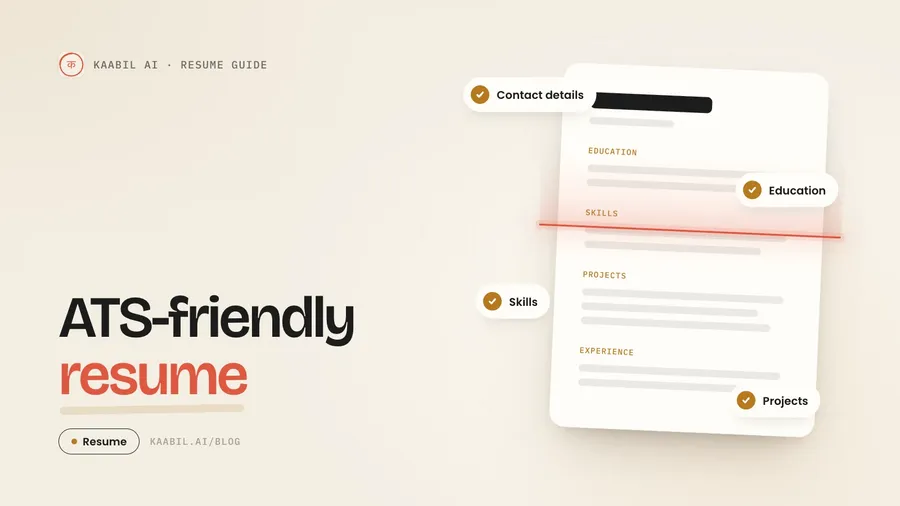
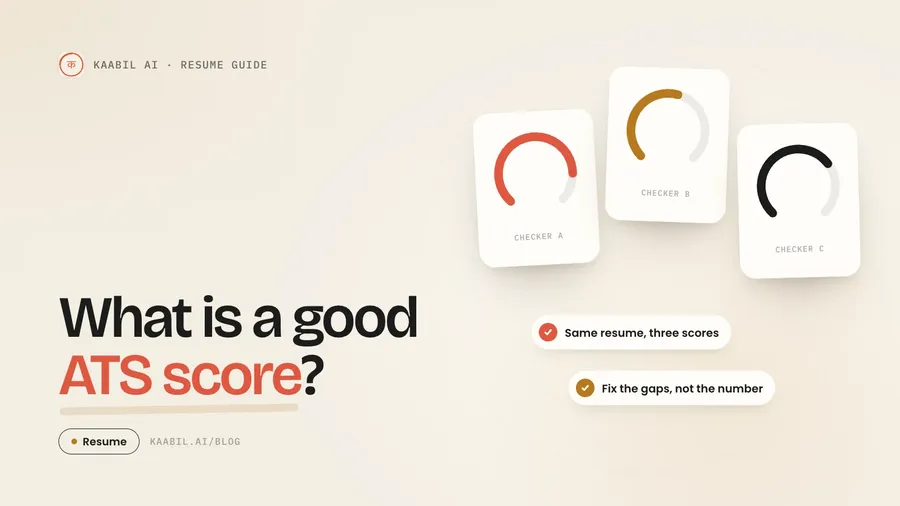
Many companies run applications through an applicant tracking system first. A recruiter then skims what is left for must-have skills, relevant experience and clear results, and reads the promising resumes closely. Knowing what a good ATS score means helps with the first step; the rest of this guide is about the second.
Why is my resume not getting shortlisted? 7 reasons and fixes#
Even qualified candidates may struggle to get interview calls because their resumes do not clearly communicate the skills and experience recruiters are looking for.
When a resume is not getting shortlisted, the issue could be related to its content, formatting or relevance to the job description.
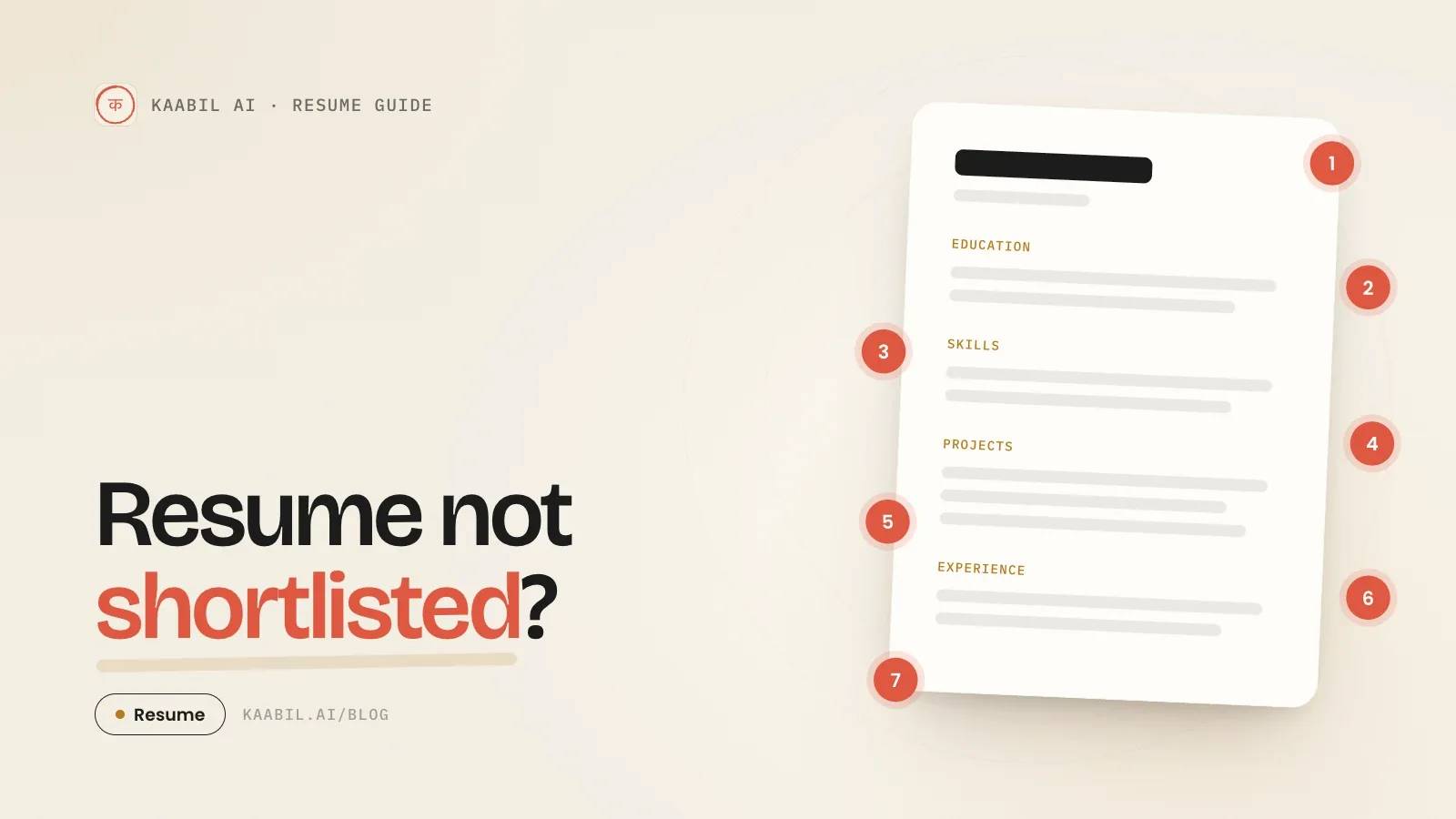
Here are seven common reasons, along with practical fixes and examples to make resumes more effective.
1. Using the Same Generic Resume for Every Job#
The Problem:
A generic resume contains broad statements that could apply to almost any position. It does not clearly explain how the candidate's skills match a specific job.
For example, phrases like "hardworking professional" or "quick learner" provide little information about actual capabilities.
The Fix:
Customize the resume according to the target role. Highlight relevant qualifications, technical skills and experience that match the job requirements.
Before:
"Motivated graduate looking for a challenging position in a reputed organization."
After:
"Marketing graduate with knowledge of SEO, social media management and content creation, seeking an entry-level digital marketing role."
A role-specific resume helps recruiters understand the candidate's suitability for the position.
2. Missing Important Skills from the Job Description#
The Problem:
Sometimes, candidates have the required skills but do not mention them clearly in their resumes.
For example, a marketing candidate may have experience with Google Analytics or keyword research but only mention "digital marketing activities."
The Fix:
Review the job description and identify relevant tools, qualifications and skills. Include these naturally in the resume wherever they reflect actual experience.
Before:
"Worked on website performance and marketing activities."
After:
"Conducted SEO keyword research and monitored website performance using Google Analytics."
Clearly mentioning relevant skills makes it easier for recruiters to identify qualified candidates.
List both hard skills and soft skills, and back each one with where you used it.
3. Listing Responsibilities Instead of Achievements#
The Problem:
Many resumes describe daily tasks without explaining the results achieved.
Statements such as "managed social media accounts" explain the responsibility but do not show the candidate's actual contribution.
The Fix:
Include measurable achievements, completed projects or specific improvements wherever accurate results are available.
Before:
"Managed social media accounts for the company."
After:
"Managed social media campaigns and increased engagement by 25% over six months." Adding achievements helps recruiters understand the impact of previous work.
Freshers can also highlight results from internships and academic projects.
4. Using a Complicated Resume Format#
The Problem:
Multiple columns, decorative graphics, inconsistent fonts and unnecessary design elements can make a resume difficult to read.
Some Applicant Tracking Systems may also struggle to extract information from complicated layouts.
The Fix:
Use a simple, single-column layout with clear section headings and consistent formatting.
An effective resume format for freshers should prioritize education, skills, projects, internships and certifications.
Before:
A resume with multiple sidebars, decorative icons and information scattered across different sections.
After:
A clean resume organized into Professional Summary, Education, Skills, Projects and Certifications.
A clear layout helps recruiters and recruitment software understand qualifications more easily.
Here is how to make your resume ATS friendly, with nine format rules.
5. Writing a Weak Professional Summary#
The Problem:
The professional summary is often one of the first sections recruiters review. A vague introduction may fail to communicate the candidate's qualifications and career interests.
This is especially common in a resume for freshers, where candidates may not have extensive work experience.
The Fix:
A strong resume summary for freshers should highlight educational qualifications, relevant technical skills and practical project experience.
Before:
"Looking for an opportunity to grow professionally and contribute to an organization."
After:
"Computer Science graduate skilled in Python, SQL and data analysis, with academic project experience in data visualization."
A focused professional summary quickly communicates the candidate's strengths and relevance to the role.
6. Including Too Much Irrelevant Information#
The Problem:
Adding unrelated skills, outdated achievements and unnecessary personal details can make a resume lengthy and difficult to scan.
When too much information is included, important qualifications may get overlooked.
The Fix:
Keep the resume focused on relevant skills, experience, achievements and certifications that support the job application.
Before:
A digital marketing resume containing unrelated school activities, outdated technical skills and a long list of hobbies.
After:
A focused resume highlighting SEO knowledge, content marketing projects, relevant internships and digital marketing certifications.
Removing unnecessary information helps recruiters focus on qualifications that matter.
7. Applying for Jobs That Don't Match the Candidate's Profile#
The Problem:
Sometimes, a resume may be well-written but still fail to get shortlisted because the candidate does not meet the job requirements.
For example, a fresher applying for a senior management position may not have the experience required for the role.
The Fix:
Target job opportunities that match existing skills, qualifications and experience levels.
Review job descriptions carefully before applying and prioritize positions with suitable eligibility requirements.
Before:
A recent marketing graduate applying randomly for entry-level, managerial and senior marketing positions.
After:
A marketing graduate applying for SEO Associate, Content Executive and Digital Marketing Trainee roles.
Applying for relevant positions improves job alignment and helps candidates focus on suitable career opportunities.
A strong resume is not just about good formatting or relevant keywords. It should clearly communicate genuine skills, achievements and suitability for the role.By avoiding these common mistakes, candidates can improve their resumes and make their applications more relevant to recruiters.
Why do freshers not get shortlisted even with good marks?#
Good marks get you past a CGPA cut-off; they rarely get you a call on their own. The usual gaps:
- No projects or internships on the resume, so the skills have nothing behind them.
- Skills listed without proof, such as “Python” with no project, course result or assessment next to it.
- CGPA cut-offs in campus drives: many companies set a minimum, so check it before you apply.
- Applying to roles that ask for one or two years of experience, where a fresher rarely clears the first filter.
Fix the first two: add one or two projects with the tools you used and the result, and show both hard and soft skills through what you did.
What should a fresher’s resume summary say?#
Two or three lines: your degree, two or three skills the role asks for, and one piece of proof. Use a summary when you have projects or internships to point to; use an objective only when you have nothing else yet.
Data analyst fresher: “B.Com graduate skilled in Excel, SQL and Power BI. Built a sales dashboard for a final-year project and cleaned data during a two-month internship.”
Software fresher: “Computer Science graduate with Python, Java and SQL. Built a student attendance app with a team of three as a final-year project.”
Avoid lines that fit anyone, such as “hardworking and motivated”. If a recruiter could swap your name for someone else’s, rewrite it.
What should you check before you send your resume?#
Before submitting a job application, reviewing the resume one final time can help identify small mistakes that may affect resume shortlisting.
A quick check ensures that the resume is accurate, easy to read and relevant to the position.
Here are seven important things to review before applying:
- Job Relevance: The resume highlights skills and qualifications that match the target role.
- Relevant Keywords: Important skills and keywords from the job description are included naturally.
- Professional Summary: The introduction clearly communicates relevant qualifications and career interests.
- Achievements and Projects: Work experience, internships or academic projects demonstrate actual contributions.
- Resume Formatting: The layout is simple, consistent and easy for recruiters to read.
- Contact Information: Email address, phone number, employment dates and other important details are accurate.
- File Format: The resume is saved in the format requested by the employer, usually PDF or DOCX.
Following these resume tips can help candidates avoid common mistakes and submit stronger, more relevant applications.
A final review takes only a minute but can help prevent important qualifications from being overlooked.
Is it your resume or the jobs you apply to?#
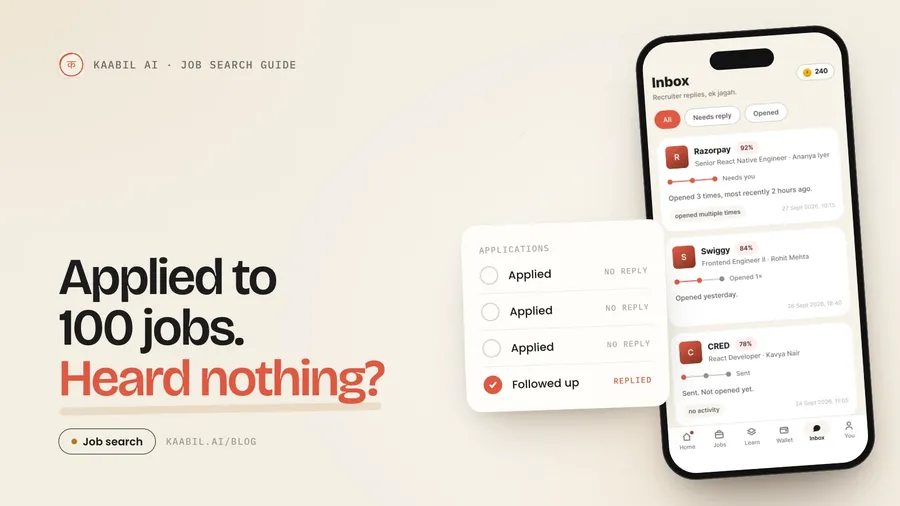
If your resume passes the checklist above and calls still don’t come, the problem is usually targeting or channel, not the document. You may be applying to roles that want more experience, applying late, or using only crowded job portals.
That needs a different fix, covered in our guide for when you have applied to many jobs and heard nothing.
Frequently asked questions
Usually because the resume does not show them in the words the job description uses, or shows them without proof. Add the exact skill names you truly have and attach a project, internship or assessment result to each.
Many companies first filter applications in an applicant tracking system, then a recruiter skims the remaining resumes for must-have skills, relevant experience and clear results before calling candidates.
Keep one master resume, then adjust the summary, skills order and top bullet points for each role. Ten minutes of tailoring per application usually beats sending the same file everywhere.
One page. Put education, skills, projects and internships first, and cut school-level details that do not help the role.
In many campus drives, yes: companies often set a CGPA cut-off. Off-campus, recruiters look more at skills and projects, but keep your CGPA on the resume if it is good.
Sources
- Hiring benchmarks 2026: Recruiting metrics and trends, Greenhouse · checked
- More Applicants But Harder To Hire: Majority Of Job Applications Do Not Meet Listed Criteria, Finds LinkedIn, LinkedIn Pressroom (15 Jan 2025) · checked
- Navigating Applicant Tracking Systems (ATS), University of Virginia Career Center · checked
- Harvard College Guide to Creating a Strong Resume, Harvard FAS Mignone Center for Career Success · checked